Tuesday, 15 November 2022

Audience theory 1


Hypodermic needle model


1) Read this Mail Online article about the effects of videogames. How does this article link to the hypodermic needle model?

In the results, participants who played violent video games had an increase in violent behaviors and hostile expectations. This suggests how the media impacts (in this case video games)      


2) How does coverage of the Talk Talk hacking case (see Daily Mail front page below) link to the hypodermic needle model? Why might someone criticise this front page? 


The newspapers editors have said that he "is a violent video game addict who barely leaves his bedroom", trying to persuade their audience that, that is the only reason for doing what he did.

They also make their audience aware that his mum is a "single mother" suggesting that she is a troubled parent that needs help, and that the boy requires a father figure.


3) What do you think of the hypodermic needle theory? Do audiences believe everything they see in the media?

I believe that the hypodermic needle is partially true as some members of the audience will passively believe anything the media tells them, whereas other members of the audience are actively questioning the media and won't believe everything - they need it to make sense to them.

Two-step flow model

1) Summarise the two-step flow model. What is an opinion leader?

Audiences are influenced by 'opinion leaders' in the media who are people make an impact on how we behave and react. 

2) How do influencers like Zendaya fit into the two-step flow model? 

They are on most social media platforms and have a large network of fans. This makes them more likely to be more influential, making people idolise them.  For example, Zendaya has a lot of music on her YouTube channel as well as some reaction videos and behind the scenes of some films. On this she can influence and give an inside of her life to her fans. According to some people, she represents girls being in a strong and powerful position with her views etc.

3) In your opinion, is the two-step flow theory still relevant today?

In my opinion I think it is still relevant to today as many people look up to opinion leaders and more people are influenced by their behaviours as they think this is the social norms. 
   
Uses and Gratifications theory

1) For each of the four categories, write about one media text (e.g. film, TV programme, newspaper etc.) that fits that particular audience use or pleasure. Make sure you explain WHY it fits the category and use images or clips to illustrate your points. The first one is done for you.

Diversion: Film - Blinded By The Light. Entertaining and offering escapism for fans of Bruce Springsteen or anyone that enjoys coming of age films or culture-clash comedies.
Personal Relationships: Creating personal relationships with Javed and the other young characters.
Personal Identity: Brown people can see themselves replicated with Javed - Racism etc. 
Surveillance: People may watch it to see how brown Asian people had to live in the 70's and 80's.


Dependency theory

1) Do you agree that audiences have become dependent on the media? What evidence or examples can you provide to support your view?

I agree that audiences have become too dependent on the media as they constantly use it non-stop. Some might use it for work etc. but majority use it for voyeuristic pleasures. The media also has the ability to satisfy people's needs and also audiences become active and participate with the media. According to some websites 66% of the population suffers from nomophobia, which is the fear from being detached from mobile phone connectivity. 


2) How has the growth of new and digital technology in the last 15 years changed people's dependency on the media? Is this a new problem?

As digital technology has had an increase of growth, due to new smart phones and being able to access it from pretty much everywhere, people have become more dependent on the media, and this has become a problem. People have become too addicted to the media and repetitively use it. This stops them from doing normal day-to-day routines. It also has an effect of making us feel pressured or having negative thoughts, due to what people say and online cyber bullying.

3) Reflecting on your own media use, how does your media consumption impact on your emotions? Does the media have an overall positive or negative impact on your health and wellbeing? Why?

I don't use the media as much as I only use it to listen to music, watch videos, message my friends, to see news and for my studies and I don't use it for too much time, so it doesn't really have a negative impact on me. However, when I do listen to music are watch a video it uplifts my mood as it is enjoying and is a diversion from the real world (Blumler and Katz - Uses and Gratification theory).


MIGRAIN assessment 1 - learner response


1) Type up your feedback in full (you don't need to write the mark and grade if you want to keep this confidential).

30/49 
B (aupc - C) Exceeded target grade = cp x4!!!
WWW: Well revised, making good use of theories + terminologies. 
EBI: Consider incorporating other narrative theories in Q1 e.g., Propp + Todorov, to allow for more depth.


2) Read the mark scheme for this assessment carefully. Identify at least one potential point that you missed out on for each question in the assessment.

Q1 - Todorov - The gun symbolises the state of disequilibrium and the eyeline of the character looking of screen suggest threat or danger.
Q2 - Both of the products suggest the shaping of people's lives, reflecting key themes of British culture and media. e.g., the Ill manors poster says "we are products of our environment... some environments are harder to live in"
Q3 - Steave Neale "repetition and difference" allows producers to evolve the genre but maintain the audience.
Q4 - Preferred reading - Vibe being opinion leaders and their sense of authority and confidence " We dare you to disagree"


3) Read this exemplar response from a previous Year 12 (an A grade) - note this was a slightly different paper in terms of the question wording (we've updated it to better reflect recent exams). Identify at least one potential point for each question from this student's paper that you could have mentioned in your assessment. 

Q1 - Todorov - new equilibrium - the person with the gun may be turning to crime to restore the equilibrium.
Q2- In the Nike advert the use of the black actor was used to create brand value and to associate Nike with the urban lifestyle.
Q3 - Abercrombie - use of genre to create a loyal audience, they become used to seeing "cliched" genre convention - they look forward to it.
Q4 - Preferred reading - the use of Miguel having his jewelry shown could be used by the producers to celebrate his success.
Oppositional reading - the use of "sex and drugs" glamorises the type of lifestyle Miguel has.


4) Did you get any media terminology or theory wrong in the assessment? Make a note of it here for future revision, including theories/terminology that you could have used but didn't.

I didn't use Todorov's theory of equilibrium - disequilibrium - new equilibrium and Propps character types for question 1.

5) Identify your weakest question and write five bullet points that would improve on your original response. Use the mark scheme and exemplar paper to identify these points - particularly focusing on the anticipated content and the top-level descriptors.

Question 1

  • Todorov - The gun symbolises the state of disequilibrium and the eyeline of the character looking of screen suggest threat or danger.
  • New equilibrium - the man turning to crime to restore the new equilibrium.
  • Barthes action and enigma codes - why is he in the middle of flats? gun? 
  • Propps - the man is presented as hero through the costume - could be the villain as well.
  • Narrative codes - genre of order (Schatz) - action, violence and confrontation 


Wednesday, 2 November 2022

Psychographics: pair presentations

 Structure


Who you are working with: Riya

The psychographic group you are researching: Succeeders

Introduce your example couple that represents your group:

1) Make up their names:

Charles and Elvira Astor

2) Where do they work/study?

Charles - Chartered accountant
Elvira - CEO

3) What do they do in their spare time?

Charles goes to play golf and Elvira does horse riding. They both go to the theatres to watch plays/musicals and go to see the opera.

Now suggest their media consumption:

Print: What newspapers/magazines does your group read (if any)? Is this on paper or tablet? 

Charles reads the financial times and GQ - To read about hard news but men's fashion too. 
Elvira reads vogue - to keep up with women's fashion.


However, they tend to read the online version on a tablet.

Broadcast: What TV programmes/channels do your group watch? Radio stations? TV package – Freeview or Sky? Films?

They own sky TV and Netflix. They both listen to Classical FM and mainly watch BBC channels and view Apprentice and BBC news.


Online: What technology do they own? What websites do they visit (if any)? What social media do they use?

They own most types of technologies such as a computer, personal laptops, mobile phones etc.
They mainly visit work related websites - Charles looks at stock exchange websites and buying shares. Both use twitter - as most influential and famous people use this to get their points across, so they like to keep up to date with that.


2) Which psychographic group do you feel best fits YOUR lifestyle and personality? Explain how and why you made your decision and provide evidence justifying this.

I would associate myself to the mainstreamers as I mainly share similarities to the majority and do things that would be considered as the 'social norms'. I usually consume media products which are well known and look for products which are value for money e.g. I watch tv channels such as BBC and ITV,  I do buy foods from fast food restaurants such as McDonalds, I watch movies which most people do watch such as moves from the action genre.  

Tuesday, 18 October 2022

Narrative

 1) Give an example from film or television that uses Todorov's narrative structure of equilibrium, disequilibrium and new equilibrium. 

The Fugitive:

Equilibrium - Starts off with the protagonist, who is a Doctor. He is at a medical gathering with his wife. When they are on their way home, he gets a phone call to tell him if he can come to the hospital to operate an emergency operation. He goes whilst his wife waits at home. When he comes back home, he hears noise.

Disequilibrium - He finds his wife dead on the floor, and then a man in his house who he then has a fight with. The man manages to escape. The police are called. They suspect that he killed his own wife and gets sentenced to death row.  When on his way, the prisoner on the bus have a fight with the guards, which results in a collision. Some prisoners, including him escape. The police/U. S. Marshall's are trying to hunt him down whilst he is on the run, but he is also trying to find his wives killer. 

New equilibrium - He finds the killer, the U.S. Marshall's believe him. His charges gets cleared.


2) Complete the activity on page 1 of the Factsheet: find a clip on YouTube of the opening of a new TV drama series (season 1, episode 1). Embed the clip in your blog and write an analysis of the narrative markers that help establish setting, character and plot.

The first episode of neighbours ever [Part 1] - YouTube

Exposition - Starts of in a dark neighborhood, with  streetlights pointing at a young man (focal point.)This continues to carry on, until he starts screaming and wakes up, we find out that it's a  nightmare. They have an Australian accents which sets the scene that it is set in Australia.

Problem - The protagonist, Danny, is having nightmares for unknown reasons ( damsel in distress). Due to this, he has an appointment with a doctor (hero) , but he cannot find the issue out. Later it is revealed that he is in doctors as his parents are worried for him. In the next scene, to women, Julia and Lorraine, who are having a conversation about Des , Lorraine's fiancé, who she is getting married to the next morning, but she seems in doubt. 

Complications - He is upset as he didn't know his father told the doctor he is having nightmares.

Climax - The  opening ends of with Lorraine's (damsel in distress) face who looks in doubt if she wants to get married to Des. The audience are left in enigma (Barthes).

Resolution - There is no resolution in the clip. The storyline will carry on as it is a soap opera.

3) Provide three different examples from film or television of characters that fit Propp's hero character role.

Star Wars - Luke Skywalker
Hot Fuzz - Nicholas Angel
Fugitive - Richard Kimble

4) Give an example of a binary opposition.

The Good vs The Bad

In Star Wars we have the two main sides. The Jedi which are the light side (good) and the Sith which are the dark side (bad). They have conflict with each other as they are from opposite sides with different views etc.


5) What example is provided in the Factsheet for the way narratives can emphasise dominant ideologies and values?

That when a police officer catches a criminal, and send them to jail, the ideologies of law and order is reinforced.

6) Why do enigma and action codes (Barthes) offer gratifications for audiences?

Problems create
enigma (Barthes) for the audience which they want to be resolved. They are hooked onto the storyline and want the puzzle to be solved.

When something is about to happen, the actions provide suspense and tension to the audience.


7) Write a one-sentence summary of the four different types of TV narrative:
  • Episodic narrative (the series) - When the problem occurs in an episode of a show, and resolved by the end of same episode.
  • Overarching narrative (the serial) - The narrative spans over multiple episodes and is resolved after a many episodes, with the ending finishing on a cliffhanger and the next episode starting with a summary of what happened in the last episode.
  • Mixed narrative - Each episode has a different narrative so a viewer can watch any episode if they have never seen that show before, but some narratives may span over a few episodes and might be mentioned in some of the episodes.
  • Multi-strand overlapping narrative (soap narrative) - A constant narrative which has multiple storylines occurring at the same time, involving different characters. 

8) How does the Factsheet suggest adverts use narrative?  

Adverts use a narrative by showing a problem and a way it can be resolved, e.g. the advert may be about someone having a headache. They will show a way to resolve this by saying to buy a painkiller they company is advertising.

Tuesday, 11 October 2022

Genre

 Task 1: Genre factsheets


1) What example is provided of why visual iconographies are so important?

The mise-en-scene of a space is usually associated with a sci-fi movie.

2) What examples are provided of the importance of narrative in identifying genre?

The type of media language used to describe the movie/show. 

3) What is the difference between character representation in action movies and disaster movies?

In action movie, the protagonist is made to look like a "lone wolf", to show how they are alone fighting against the world, with little aid. In a disaster movie, the protagonist is made to look like a hero/heroine, but also has a supporting cast who don't know each other but are fighting against the same thing.

4) What are the different ways films can be categorised according to Bordwell?
 
How genre is used by an audience and how genres are used by media producers. 

5) List three ways genre is used by audiences.

They use their previous knowledge to decide if they will like the specific movie/show they are looking to watch.
They compare the texts to other texts.
They use their knowledge to reject a text. 

6) List three ways genre is used by institutions or producers.

Used as templates to follow to construct a text.
Using it to attract an audience.
Using it as a marketing text e.g. film trailers.

7) What film genre is used as an example of how genres evolve? What films and conventions are mentioned?


Gangster movies. The usual conventions used are, that there a gang of criminals whose lives are glamorised  due to the money and reputation they have and the conflict that they have with the police.


1) List five films the factsheet discusses with regards to the Superhero genre.

-The X men franchise
-Superman
-V for Vandetta 
-300
-Scott Pilgrim vs the World

2) What examples are provided of how the Superhero genre has reflected the changing values, ideologies and world events of the last 70 years?

Superman - During the course of its time, Superman faces different villains and obstacles. He faces different types of relationships with different types of women.

3) How can Schatz's theory of genre cycles be applied to the Superhero genre?


Innovation - Superheroes were established through children's comic books.

Classical - In the 1950's the genre was going through the stage of repetition where there were key conventions through each superhero genre film produced.

Parody - Batman (1960) was comedic, so the audience couldn't take him seriously.

Deconstruction - In 1997 the Batman and Robin film didn't receive a positive feedback. This lead to the deconstruction of the genre leading to the rise of new type of superhero film such as The X Men (2000).


Task 2: Genre analysis case study


General:


1) Why did you choose the text you are analysing?

I chose to analyse 'Back To The Future' franchise as it is great blockbuster, which is well known.

2) In what context did you encounter it?

My parents introduced me to the movie.

3) What influence do you think this context might have had on your interpretation of the text?

I thought if my parents had seen the movie, than it must be good and it must be suitable for me to see.

4) To what genre did you initially assign the text?

Sci-Fi

5) What is your experience of this genre?

I love this genre, as the science interests me and all the graphics.

6) What subject matter and basic themes is the text concerned with?

Scientific technology/equipment and unrealistic objects that don't exist.

7) How typical of the genre is this text in terms of content?

It has the time-travel and teleportation elements.

8) What expectations do you have about texts in this genre?

It will have some sort of alien or extraterrestrial life forms. 

9) Have you found any formal generic labels for this particular text (where)?

Time-travelling - it has a time machine ( the DeLorean)

10) What generic labels have others given the same text?

A fantasy movie.

11) Which conventions of the genre do you recognize in the text?

Time-travelling
Teleportation
Futuristic machinery 

12) To what extent does this text stretch the conventions of its genre?

In Back To The Future Part III - The main theme becomes more of  a western movie.

13) Where and why does the text depart from the conventions of the genre?

It becomes of a western movie, maybe because they went through the phase of deconstruction so decided to add another genre.


14) Which conventions seem more like those of a different genre (and which genre(s))?

The setting and the whole narrative in Part III, e.g. the western showdown scene. 

15) What familiar motifs or images are used?

The DeLeroen, which is the time machine.

Mode of address:


1) What sort of audience did you feel that the text was aimed at (and how typical was this of the genre)?

Mainly aimed and young adults (15 - 40, but is suitable for all ages), this is due to have the protagonist, Marty, who is a school student and all the older characters such as the Doc. Due to this it has genre of coming of age. 

2) How does the text address you?

The life of the school students is relatable to me as I am still studying.

3) What sort of person does it assume you are?

A young adult.

4) What assumptions seem to be made about your class, age, gender and ethnicity?

A middle class, young male adult, from a white background.

5) What interests does it assume you have?

An interest in science and technology.


Relationship to other texts:

1) What intertextual references are there in the text you are analysing (and to what other texts)? 

The music used - 2 songs from Huey Lewis and the News, "Back in Time" and "Power of Love" and "Johnny B. Goode" by Chuck Berry, "Earth Angel" by  Marvin Berry.

2) In terms of genre, which other texts does the text you are analysing resemble most closely?

In terms of genre, I think Star Wars.
 
3) What key features are shared by these texts?

 As both of them have futuristic machinery, the mode of transportation e.g. the Delorean as a time machine and the Millennium Falcon which is a spaceship.

4) What major differences do you notice between them?

One is set on Earth, but in the past and the other is set in another made up galaxy and planets.


Tuesday, 4 October 2022

Reception Theory


1) What are the preferred, negotiated and oppositional readings for the RBK 50 Cent advert?

Preferred:

The preferred reading would be that RBK support and promote change/identity and black culture/heritage. They also may be raising awareness on social injustice. This is due to having a black celebrity and having the influential quotes from himself.

Negotiated:

The negotiated reading would be that we can understand their point or what they might be promoting. However we can't understand what they are gaining and what they are trying to advertise. It isn't fully clear as to which RBK product they are promoting.

Oppositional:

The oppositional reading would be that, Reebok are exploiting black people for their own monetary gain and that they are using him to gain attention from others so that they get the publicity. Reebok are reinforcing stereotypes that black people are associated with crime, due to having a black actor with images of fingerprints ( which look like they are from a criminal record). 


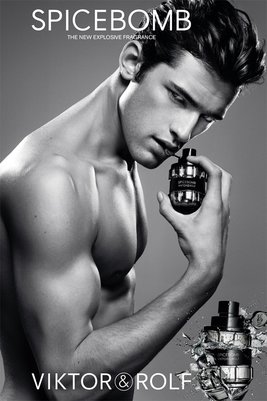
2) What are the preferred, negotiated and oppositional readings for the advert of your own choice that you analysed for last week's work?


spice.jpg (267×401) (weebly.com)


Preferred:

The preferred reading would be that you should get the aftershave he has in his so you can be like him and be a "SPICEBOMB", therefore buy the fragrance and be irresistible to all women.

Negotiated:

The negotiated reading would be that why have they only used one person in the ad, usually in fragrance ads they will have a male and many females or a female and many males to promote it. So this ad may be reinforcing that gender nowadays isn't 2 sides but many more.

Oppositional:

The oppositional reading would be that you are only allowed to buy the product if you have his body structure (muscular body), and that its only exclusive to white people due to having a white actor as the model. 


3) How useful is Reception theory when analysing media products? 

In my opinion, reception theory is really useful when analysing media products as it covers all the areas when someone thinks about something. This is due to having multiple meanings which start to question an audience.


Preferred - they agree with subject. The producers will structure their product in a specific way using signs and signifiers. For example using a powerful centralised image to connote a specific meaning, for example  the "SPICEBOMB"  advert may suggest how the fragrance gives you power. A target audience will understand the message straight away.  Negotiated  - they have a neutral feeling towards the subject (midway). The structure and the main topic may be understood but the audience won't understand what some images/texts are trying to represent. For example, the fingerprints on the Reebok 50 cent advert. Oppositional - they disagree with the subject. It shows how we as an audience are entitled and freely think about the media products in our own perspective. 


Overall, media texts are polysemic and ultimately it is up to us, the audience, to interpret it in any way,  (de Saussure)


Newspaper: Final Index

1) Newspapers: Weekly news stories from Mail Online and The Guardian  2) Newspapers: The decline in print media 3) Newspapers: News Values  ...